Archives
- 2026-10
- 2026-09
- 2026-08
- 2026-07
- 2026-06
- 2026-05
- 2026-04
- 2026-03
- 2026-02
- 2026-01
- 2025-12
- 2025-11
- 2025-10
- 2025-09
- 2025-03
- 2025-02
- 2025-01
- 2024-12
- 2024-11
- 2024-10
- 2024-09
- 2024-08
- 2024-07
- 2024-06
- 2024-05
- 2024-04
- 2024-03
- 2024-02
- 2024-01
- 2023-12
- 2023-11
- 2023-10
- 2023-09
- 2023-08
- 2023-07
- 2023-06
- 2023-05
- 2023-04
- 2023-03
- 2023-02
- 2023-01
- 2022-12
- 2022-11
- 2022-10
- 2022-09
- 2022-08
- 2022-07
- 2022-06
- 2022-05
- 2022-04
- 2022-03
- 2022-02
- 2022-01
-
Apelin is a bioactive peptide and endogenous ligand for the
2023-09-08

Apelin is a bioactive peptide and endogenous ligand for the APJ receptor (APLNR), a member of the G protein coupled receptor family that shares a similar sequence as the angiotensin type-1 receptor (AT1) [5]. Early studies demonstrated that the apelin/APLNR receptor axis plays a significant role in
-
Maynard et al demonstrated that serum levels of
2023-09-08
Maynard et al. [54] demonstrated that serum levels of sFlt-1 were five times higher in pregnant women with PE than in normotensive women; as a consequence, VEGF and PlGF levels were found to be proportionally reduced in these women [54]. The literature confirms that there is a sharp increase in sFlt
-
Therefore in the present study we
2023-09-08
Therefore, in the present study, we first examined the ATRAP Sulfo-NHS-Biotin mg in human leukocytes of healthy subjects. We next analyzed possible relevant clinical factors affecting ATRAP expression in leukocytes of patients with NCDs. Furthermore, we examined the possible effect of ATRAP downregu
-
Cell surface metalloproteases coordinate signaling during de
2023-09-08
Cell surface metalloproteases coordinate signaling during development, tissue homeostasis, and disease. A disintegrin and metalloprotease 17 (ADAM17) is a well-characterized member among ADAM family, which mediates the cleavage of various cell surface proteins (Black, 2002, Black et al., 1997, Dello
-
Since HETEs and lipoxins the downstream products of LOX from
2023-09-08
Since HETEs and lipoxins, the downstream products of 12/15-LOX from AA, may alter cellular proliferation and apoptosis,31, 32 and possibly explain the increase of tumour progression and metastasis. However, we here found that HETEs did not affect the proliferation of melanoma in vitro. This may part
-
We investigated the role of ABT
2023-09-08
We investigated the role of ABT 702 treatment in MAPKinase activation in mouse microglia in vitro. In Fig. 7D immunocytochemistry results revealed that Iba1 and p-ERK1/2 co-localized in LPS induced mouse microglia. In our previous study we have reported that LPS activates ERK1/2 phosphorylation (Ahm
-
Qualitative inspection of the single
2023-09-08

Qualitative inspection of the single-channel traces presented in both Figures 3 and 4 shows that within bursts of activity, βAnc-containing AChRs display a marked reduction in open probability. To quantify these differences in single-channel behavior, we performed dwell-time analysis under high-reso
-
br Discussion The measurement of gonadotropins FSH LH is
2023-09-08

Discussion The measurement of Okadaic acid mg (FSH, LH) is critical in the evaluation and assessment of 46,XX females presenting with primary amenorrhea and lack of pubertal development. A serum level of FSH higher than 40 U/L is diagnostic of ovarian failure (6), as seen in the present case. Th
-
Our research is the first to report that
2023-09-07
Our research is the first to report that administration of HMW-HA is an effective strategy to defend against PM2.5-induced disruption of pulmonary epithelial barrier and lung injury, and addresses that HMW-HA restricts PM2.5-induced epithelial apoptosis through reducing oxidative stress and followin
-
In our study S aureus activated the TLR signaling
2023-09-07
In our study, S. aureus activated the TLR signaling pathways of BMECs, thus inducing profibrogenic growth factor expression via NF-κB and AP-1. Since fibrosis is an important pathogenic process in both bovine and human mastitis, further studies on the molecular mechanisms of S. aureus infection are
-
Given that neither case is derived from multiplex families
2023-09-07
Given that neither case is derived from multiplex full read with affected individuals, principles of Mendelian segregation cannot be applied to implicate the T201S mutation in causing familial CJD. In addition, like many rare gene variants, it is not possible to apply practice guidelines such as th
-
br Model Fig demonstrates the block
2023-09-07
Model Fig. 1 demonstrates the block-scheme of main interactions between variables of the model under investigation. These interactions are described below in details and are expressed in mathematical form as well, where all variables are the functions of space and time coordinates, r and t, which
-
Tumor tissues often experience hypoxia owing to accelerated
2023-09-07
Tumor tissues often experience hypoxia owing to accelerated growth rates of malignant cells, accumulation of metabolic products, disorganization of tumor blood vessels, and high interstitial fluid pressures (Makino et al., 2001). In response to AAD treatment, tumor vascular density often decreases t
-
Studies have demonstrated that AT plays
2023-09-07
Studies have demonstrated that AT2 plays a greater role in modulating arterial pressure in females than in males. Chronic low-dose infusion of Ang II decreased blood pressure in female rats at a dose that had negligible effects in males. Furthermore, AT2 blockade eliminates the depressor response to
-
MAPs require divalent transition metal ions as cofactors for
2023-09-07
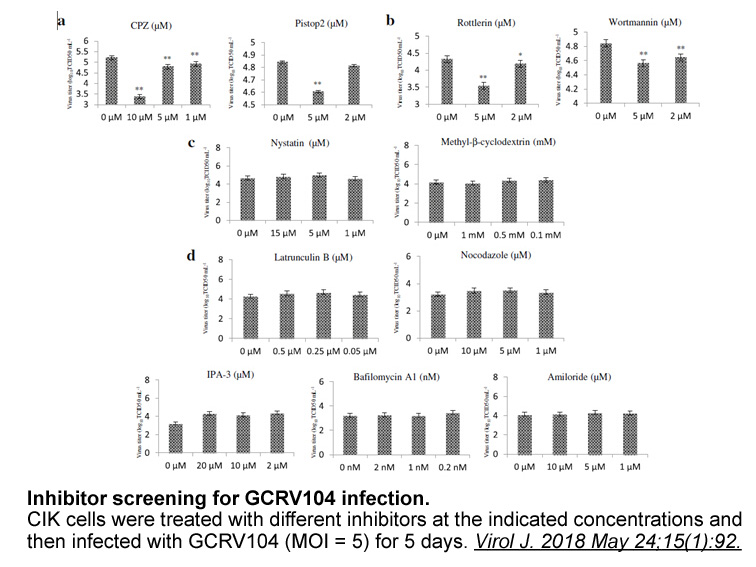
MAPs require divalent transition metal ions as cofactors for activity [21]. Previous studies on MAPs from different organisms indicate cobalt ions to be the most preferred divalent metal activator [22]. However, MAPs also exhibit activity with other divalent cations like Mn(II), Ca(II), Ni(II) or Fe
7788 records 310/520 page Previous Next First page 上5页 306307308309310 下5页 Last page