Archives
- 2026-06
- 2026-05
- 2026-04
- 2026-03
- 2026-02
- 2026-01
- 2025-12
- 2025-11
- 2025-10
- 2025-09
- 2025-03
- 2025-02
- 2025-01
- 2024-12
- 2024-11
- 2024-10
- 2024-09
- 2024-08
- 2024-07
- 2024-06
- 2024-05
- 2024-04
- 2024-03
- 2024-02
- 2024-01
- 2023-12
- 2023-11
- 2023-10
- 2023-09
- 2023-08
- 2023-07
- 2023-06
- 2023-05
- 2023-04
- 2023-03
- 2023-02
- 2023-01
- 2022-12
- 2022-11
- 2022-10
- 2022-09
- 2022-08
- 2022-07
- 2022-06
- 2022-05
- 2022-04
- 2022-03
- 2022-02
- 2022-01
- 2021-12
- 2021-11
- 2021-10
- 2021-09
- 2021-08
- 2021-07
- 2021-06
- 2021-05
- 2021-04
- 2021-03
- 2021-02
- 2021-01
- 2020-12
- 2020-11
- 2020-10
- 2020-09
- 2020-08
- 2020-07
- 2020-06
- 2020-05
- 2020-04
- 2020-03
- 2020-02
- 2020-01
- 2019-12
- 2019-11
- 2019-10
- 2019-09
- 2019-08
- 2019-07
- 2019-06
- 2019-05
- 2019-04
- 2018-07
-
Methylpiperidino pyrazole br Transparency document br Acknow
2020-04-13
Transparency document Acknowledgments This work was supported by the Ministry of Education, Youth and Sports of the Czech Republic (the National Program of Sustainability I, Grants LO1204 and LO1304), by the Czech Science Foundation (15-17282Y) and by Palacký University Olomouc (IGA_PrF_2017_0
-
br Conflict of interest statement br References
2020-04-13
Conflict of interest statement References and recommended reading Papers of particular interest, published within the period of review, have been highlighted as: Acknowledgements We acknowledge financial support by the Swiss State Secretariat for Education, Research and Innovation (Federal
-
br Genes involved in oxysterol metabolism The main enzymes
2020-04-13
Genes involved in oxysterol metabolism The main enzymes that participate in the metabolism of oxysterols generally belong into one of two groups: transferases or oxidoreductases [22]. The following chapter describes those genes of oxysterol metabolism whose polymorphisms have been associated with
-
SB408124 br Discussion The regulation of intracellular chole
2020-04-13
Discussion The regulation of intracellular cholesterol levels is a biological process of vital importance for cellular function and integrity, and involves robust transcriptional and post-transcriptional mechanisms that are sensitive to metabolic feedback control. Amongst post-transcriptional mec
-
However a two receptor model presents a
2020-04-13
However, a two-receptor model presents a mystery of how MBns know whether they are receiving an acquisition or forgetting signal from the PPL1 DAns. The most attractive explanation for this is that the two receptors might have different signaling properties and mobilize distinct signaling cascades.
-
Some studies have demonstrated that BMSCs can provide severa
2020-04-13
Some studies have demonstrated that BMSCs can provide several trophic and growth factors that play important roles in cell survival, angiogenesis, and BMSC differentiation, but not cell replacement (Peled et al., 1999, Shen et al., 2007, Ji et al., 2004). This paracrine effect of BMSCs is a potentia
-
br Materials and methods br Results br
2020-04-13
Materials and methods Results Discussion PKA and Epac are two principal effector proteins involved in cAMP signaling; they are expressed in a wide range of tissues and control diverse biological functions [10]. The existence of two cAMP effectors provides more precise regulation of cAMP sig
-
While we previously demonstrated that TraG
2020-04-13

While we previously demonstrated that TraG is inhibited by specific transglycosylase inhibitors and that enzymatic activity is strongly reduced upon mutation of the potential catalytic core (Arends et al., 2013), the enzymatic mechanism of both domains was not assigned. Here, by mass spectrometry an
-
Because most fusion detection methods were developed to anal
2020-04-10
Because most fusion detection methods were developed to analyze paired-end reads (and especially Illumina data), they are not suitable for identifying fusion junction-spanning reads in single-end Ion Torrent libraries. Therefore, we developed the FusionDetect algorithm (implemented in the ChildDecod
-
CAA is a carcinogenic metabolite of
2020-04-10
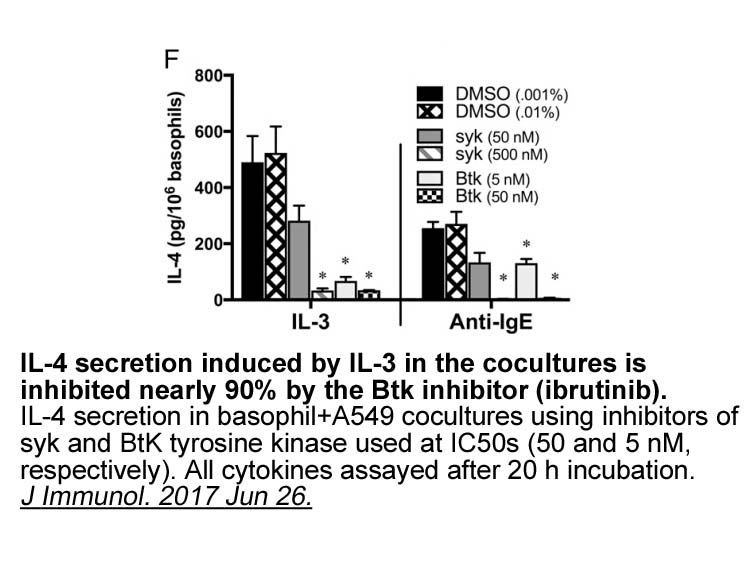
CAA is a carcinogenic metabolite of vinyl chloride, forming several different DNA adducts including the cyclic michele fuortes adducts 3,N4-ethenocytosine (εC), 1,N6-ethenoadenine (εA), N2,3-ethenoguanine (εG), and 1,N2-ethenoguanine (1,N2-εG), with the A and C cyclic adducts the most predominant,
-
Two in vitro reports using lung fibroblasts have
2020-04-10
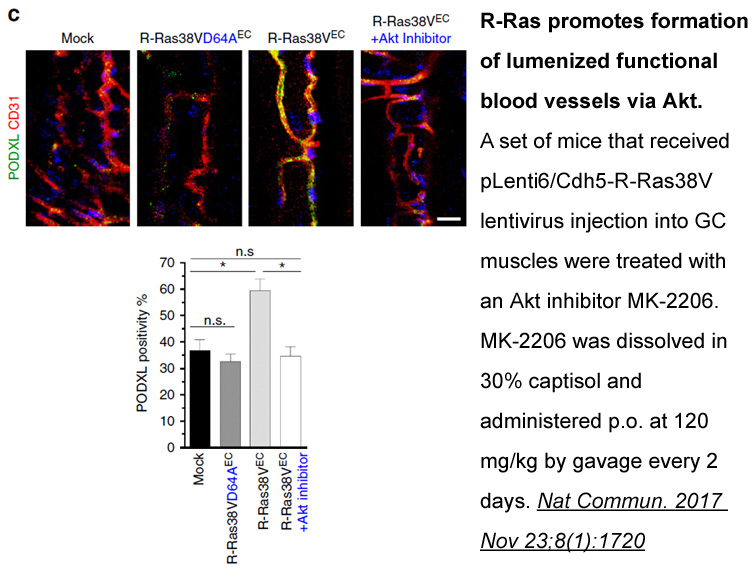
Two in vitro reports using lung fibroblasts have shown that cell transmigration, using transwell migration experiments, through collagen I-coated inserts is mediated by DDR2 and the DDR2-associated signaling kinases JAK2 and ERK1/2, but not DDR1 [63] and that DDR2 regulates the adhesion of fibroblas
-
br Conclusion Conventional surgical excision of the tumoral
2020-04-10
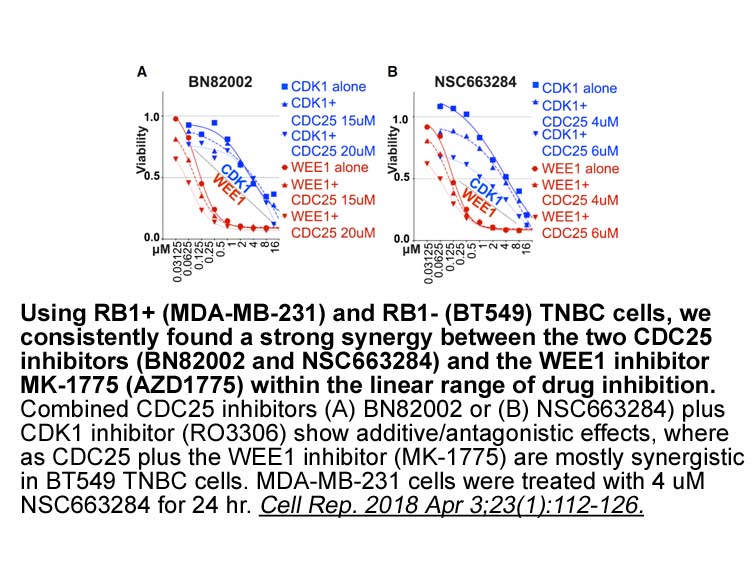
Conclusion Conventional surgical excision of the tumoral lesions is the primer therapy for the BCC. Recurrence rates are significantly higher for surgical margin positive lesions that also creates challenges for the surgeons on obtaining best cosmetic and oncologic results. In our study, EGFR Qui
-
The authors identified inhibitors of SUMOylation using two a
2020-04-10

The authors identified inhibitors of SUMOylation using two assays to monitor the conjugation of SUMO1 to RanGAP1 by E1 and E2 enzymes: a fluorescence resonance energy transfer (FRET) primary screen that evaluated over 250,000 compounds and a chemiluminescence secondary screen. A counter screen was u
-
p is a tumor suppressor
2020-04-10
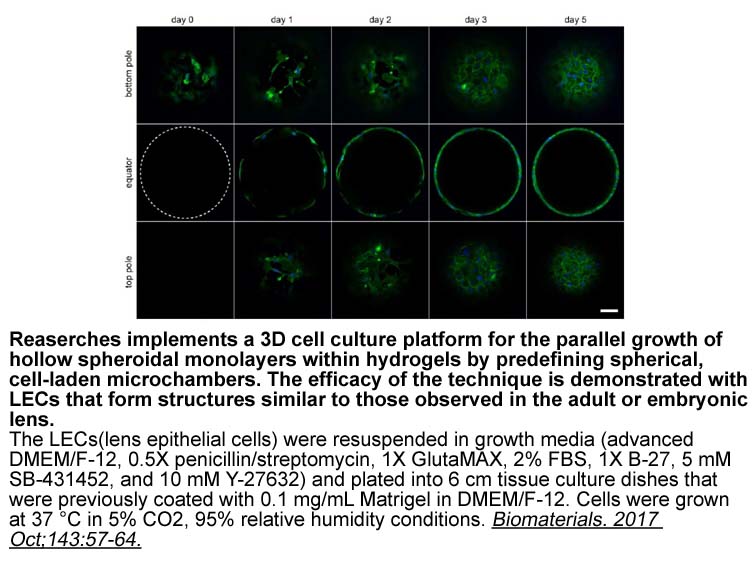
p16 is a tumor-suppressor gene that inhibits cyclin-dependent kinase 4 and 6 activities and arrests the Topiroxostat in the G1 phase. Aberrant methylation and mutation of p16/MTS1 in OSCC of patients was found in our previous study. Moreover, the frequency of hypermethylation of p16 from the present
-
Crystal structures of various CRM
2020-04-09
Crystal structures of various CRM1 complexes have provided insight into molecular details of the interactions between CRM1 and its interaction partners during the transport cycle. CRM1 cooperatively binds RanGTP and cargo in the nucleus (Paraskeva et al., 1999). In this ternary complex, RanGTP is lo
15371 records 844/1025 page Previous Next First page 上5页 841842843844845 下5页 Last page